AI Technology in EMS
Imagine calling 911 for a loved one, struggling to describe their sudden chest pain. While your local dispatcher and responding paramedics coordinate help, industry data reveals a silent "Digital Guardian" often listens alongside them. This smart software recognizes subtle background breathing problems before you even realize what is happening.
Predicting where that help is needed next works much like a daily weather forecast. Just as meteorologists track wind patterns to predict rain, AI Technology in EMS analyzes local traffic and historical trends. By positioning ambulances near high-risk areas before crashes actually occur, this EMS innovation significantly cuts down the time it takes for emergency teams to reach your door.
Despite these rapid advancements, you never need to worry about robots taking over your care. Modern paramedic and EMT tech tools simply act as a watchful second pair of eyes that process critical information instantly. While the software might suggest a potential treatment path, the highly trained human in the room always remains in complete control of every medical decision.
Predicting the Emergency: How AI Prepares for Accidents Before They Happen
Just as we use weather forecasts to know when to pack an umbrella, paramedics now use similar tools to predict emergencies. Traditionally, crews waited at fixed stations for the phone to ring. Today, predictive dispatch algorithms for emergency calls act like a smart forecast. They place ambulances in unusual spots just to stay closer to potential needs.
Making these educated guesses requires pattern recognition, a simple form of EMS automation. The software acts as a digital co-pilot, constantly analyzing several daily factors:
- Weather conditions like sudden ice storms.
- Historical accident data at busy intersections.
- Local events like large outdoor concerts.
By moving crews early, ambulance routing optimization saves crucial travel minutes, which often leads directly to better patient recovery.
Despite this advanced mapping, human dispatchers oversee the operation, determining exactly where ambulances park. Getting the crew nearby is just the first step of the safety net. When the phone finally rings, the next phase of support kicks in through specialized audio recognition.
The AI Ears of 911: Recognizing Life-Threatening Strokes Through Sound Alone
When a loved one's words suddenly slur during a medical crisis, a racing heart and high stress can make it difficult to communicate. Even experienced dispatchers find it challenging to catch every subtle detail during these chaotic, critical moments over the phone.
To ease this burden, specialized software steps in to help. Think of natural language processing in emergency medical dispatch as a smart digital assistant listening quietly in the background. It recognizes specific words, panicked speech patterns, or the faint sound of irregular breathing that signals a sudden crisis.
By instantly flagging these clues, the software catches tiny speech delays through AI-assisted stroke detection in the field. This helps dispatchers send specialized help faster. Artificial intelligence also improves cardiac arrest outcomes by recognizing faint gasps for air, prompting dispatchers to start CPR instructions sooner.
Ultimately, the human dispatcher uses these suggestions to make critical choices, retaining full authority over the response. Once that ambulance arrives, the digital support network expands even further to help the crew on the ground.
A Second Pair of Eyes: How AI Assists EMS Crews with Instant Trauma Assessment
When EMTs, AEMTs, or paramedics rush through your door, they already rely on standard monitors to check vital signs. Today, those traditional tools are gaining a major upgrade through wearable biosensors for real-time patient monitoring. Instead of just displaying raw numbers, these modern devices use computer vision for trauma assessment in ambulances. By acting as a second pair of eyes, specialized cameras and software can measure injuries in a bouncing, moving vehicle much faster than the naked human eye.
This visual technology serves as an ever-watchful partner specifically looking for hidden symptoms that aren't obvious at first glance. During a chaotic emergency, the software instantly checks critical physical details:
- Pupil dilation for signs of head trauma
- Blood loss estimation to prepare for immediate transfusions
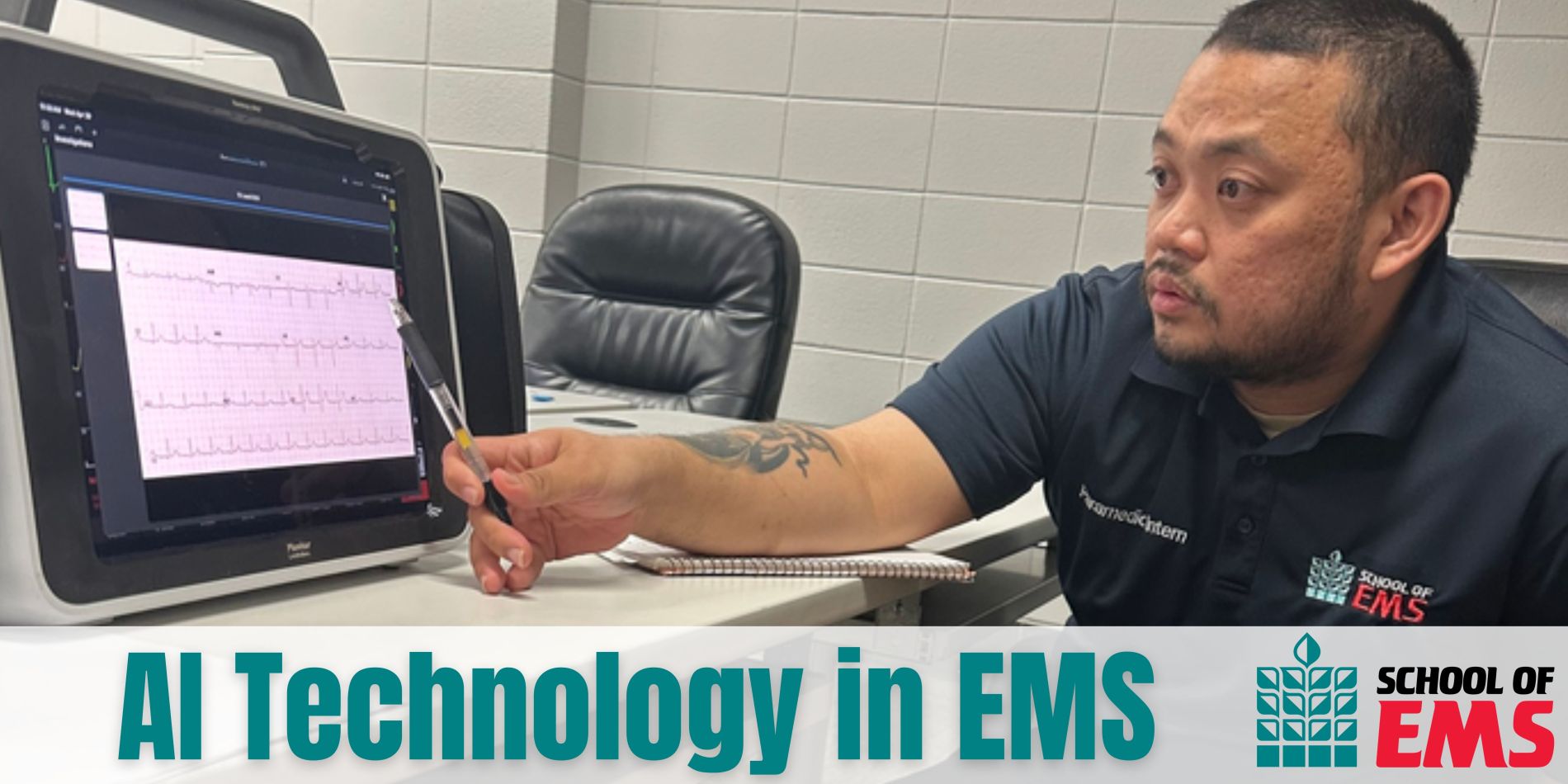
- EKG pattern recognition to catch silent heart attacks
Equipping emergency crews with these smart clinical decision support systems for first responders is like giving a young medic the collective wisdom of a thousand veteran doctors.It instantly compares a patient's symptoms against millions of historical medical records, suggesting the safest treatments while the responding clinician retains ultimate medical authority.
Beating Traffic with Machine Intelligence: Why Your Ambulance Never Takes the Long Way
Most of us rely on GPS apps to navigate commutes, but guiding an ambulance requires something far more powerful. While a standard map shows the shortest physical distance, that path is completely useless if it is blocked by sudden construction. By using machine learning for ambulance routing optimization, modern dispatch systems instantly calculate the true fastest route, dodging unexpected bottlenecks the moment they occur.
Anticipating these hurdles early is a life-saving EMS innovation. Just as meteorologists forecast rain by studying wind, smart software analyzes weather and historical patterns to predict "invisible" traffic jams. If a heavy downpour typically clogs the highway, the system automatically redirects the rescue crew before they ever encounter a line of stopped cars.
This technology even communicates directly with city infrastructure to clear the way. Approaching an intersection, the software talks to traffic lights, turning them green for a safe, non-stop ride. Because these smart systems handle stressful driving logistics, EMTs, AEMTs, and paramedics can focus entirely on patient care the moment they arrive.
More Time for Care, Less for Paperwork: How Automated Speech Recognition Helps EMS Providers Focus on You
When an emergency happens, you want an EMT’s/ paramedic’s hands completely focused on you. Yet, rescue crews must document every medication given and vital sign checked. Traditionally, this meant pausing life-saving care to type notes on a tablet. Today, EMS automation solves this stressful distraction.
Using automated speech recognition for paramedic documentation acts like a helpful digital assistant in the back of the ambulance. As the medic speaks their actions out loud, the software instantly types the information. This seamless AI integration with electronic patient care records provides three critical benefits:
- Focus on patient: Hands remain securely on you, never on a keyboard.
- Faster hospital reports: Emergency room doctors receive written updates before you even arrive.
- Higher accuracy: Capturing exact details instantly prevents memory gaps later.
Eliminating hours of late-night paperwork prevents burnout, keeping our community's heroes sharp for high-stakes scenarios.
Mastering Modern Medicine: How Virtual Reality Prepares First Responders for Rare Emergencies
When EMS crews face a rare, life-threatening situation they have only read about, immediate and precise action is required. Previously, gaining experience meant waiting for a real emergency. Today, technology allows first responders to safely practice for dangerous calls without putting any patient at risk.
Wearing familiar headsets, crews step into lifelike VR simulations. This breakthrough in AI in healthcare education uses smart software to create unpredictable virtual patients whose breathing changes based on the medic's choices. Additionally, augmented reality for remote paramedic training lets veteran instructors safely guide newer EMTs, AEMTs, and paramedics through these stressful digital scenarios from miles away.
Thanks to this advanced preparation, your local team arrives ready for anything. They have already managed specific emergencies in the digital world, equipping them with the muscle memory needed for real-life crises.
The Human in the Loop: Why AI is a Co-Pilot, Not a Replacement, for Local Heroes
When you call 911, you want a compassionate person making decisions, not a machine. Navigating the ethical challenges of AI in pre-hospital care requires keeping humans in control. In a comparison of manual vs. AI-driven triage systems, older methods used paper guides, while modern software spots hidden warning signs. Yet, human dispatchers always make the final call.
Trusting this EMS technology means knowing your information is safe. Every tool follows strict medical privacy laws called HIPAA, acting as a locked digital vault. The software uses health data solely to treat you, never exposing private details to the public.
Ultimately, these smart programs work as a reliable co-pilot, enhancing human intuition rather than replacing it. By processing background data, they let first responders focus entirely on comforting and treating patients.
Your Safer Future: What the Next Generation of AI Means for Your Community
AI Technology in EMS is not replacing human care; it is building a smarter, faster safety net. The real power of this invisible co-pilot lies in its ability to stage an ambulance just around the corner before a 911 call is even placed.
As EMS technology advances, these systems continue to support the emergency responders arriving at your door. The next time a siren passes by, it represents both dedicated local heroes and the unseen innovations helping them reach emergencies faster than ever before.
School of EMS: Blending Resolute EMS Education with Modern Innovations
From predictive dispatch and intelligent routing to real-time patient monitoring and VR-based training, AI is transforming EMS into a faster, smarter, and more responsive field while keeping human expertise firmly at the center. These advancements underscore an important truth: the future of emergency care depends on highly trained professionals who know how to leverage cutting-edge tools in high-pressure moments. That’s where the School of EMS stands apart. By preparing the next generation of first responders with both foundational skills and a forward-thinking understanding of modern technology, we ensure graduates are ready for the realities of today’s evolving EMS landscape. For those looking to enter a field where innovation and lifesaving care go hand in hand, the School of EMS is where that journey begins.
Contact Us Explore Our Programs