


EMR Program
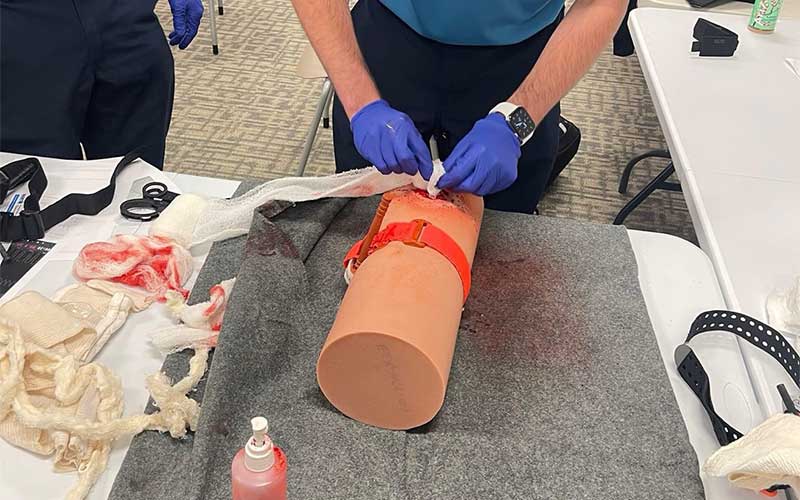
EMR (Emergency Medical Responder) Program Overview
An EMR (emergency medical responder) is often the “first” first responder. While some EMRs work in healthcare, most EMRs are skilled professionals outside the medical field who learn the basics of medical emergencies, trauma care, and oxygen administration to respond to incidents in high-risk areas while waiting on the 911 system to arrive. It is common to find EMRs working in volunteer fire departments, oil fields, large warehouses, office high-rises, and other areas where an ambulance response might be delayed.
EMRs are often regulated at the State or even local level and may have various names across the United States. For example, the term Emergency Care Attendant (ECA) is used in Texas.
Currently, there is no accrediting body for EMR programs.
All qualified School of EMS EMR programs are approved by the state in which they are held. All School of EMS graduates are eligible to attempt the National Registry exam.
Program Highlights
- Range of Program Cost *$450-$950
- 8-week Online Program
- Flexible Live skills sessions
- Program completed in weekly modules with an assigned Primary Instructor dedicated to you and your classmates.
- Lectures Pre-recorded for unlimited viewing.
- Access to education team via several formats for educational assistance.
- Bi-Weekly Non-mandatory live review sessions with Q/A opportunities
- Access to all Live Q/A sessions with instructors within all programs.
What's Included?
- Educational Platform Access
- American Heart Association Basic Life Support Certification
- All State Jurisprudence Certifications or similar requirements
- Background screening
- Drug screening
Contact Us Today
Fill out the form below to sponsor an EMR Class near you or click here to email direct.
*For total estimated cost, see the institutional catalog here for more information
EMR Program FAQs
An Emergency Medical Responder (EMR) is often the first person to provide care during a medical emergency. EMRs are trained in emergency response, trauma care, oxygen administration, and basic patient assessment while waiting for EMS to arrive.
Emergency Medical Responders (EMRs) provide immediate basic emergency care until higher-level EMS personnel arrive. EMTs receive additional education and training that allows them to perform more extensive patient assessments, interventions, and transportation responsibilities. EMR certification is often the first step into emergency medical services.
The EMR program is ideal for volunteer firefighters, industrial workers, oil field personnel, warehouse safety teams, and others who may respond to emergencies before an ambulance arrives.
To become an EMR, you must successfully complete an approved EMR training program and meet your state's certification requirements. School of EMS graduates are eligible to attempt the National Registry examination where applicable.
Our EMR program ranges from $450-$950.
Program length varies by state and course schedule. The School of EMS EMR Program is designed to provide foundational emergency medical training in a shorter timeframe than EMT, AEMT, or Paramedic education.
The School of EMS EMR Program is delivered through weekly learning modules with instructor support, educational assistance, and live review opportunities. Students should review their course schedule for any required skills sessions or state-specific requirements.
Yes, for many students, EMR (Emergency Medical Responder) can be an excellent first step before earning an EMT certification, but it is not always required.
Yes. All qualified School of EMS EMR programs are approved by the state in which they are held, and graduates are eligible to attempt the National Registry exam.
Our program includes American Heart Association Basic Life Support (BLS) certification and all required state jurisprudence certifications or similar requirements.
The program is delivered in weekly modules and includes instructor support, educational assistance, and live review opportunities to help students succeed.
EMR certification can prepare individuals for roles in volunteer fire departments, industrial safety teams, emergency response organizations, oil and gas operations, warehouse safety programs, and other environments where emergency response training is valuable.
Yes. EMR training provides foundational emergency care skills that can be valuable if you later decide to pursue EMT, AEMT, or Paramedic education.
Join School of EMS and take the next step toward a rewarding career as EMT or Paramedic professionals.
