


A Guide to Staying in Touch at School of EMS
– By #School of EMS

In EMS, we love a good acronym. We’ve got OPQRST, SAMPLE, and DCAP-BTLS drilled into our brains. But there is one foundational concept that doesn’t have a fancy acronym, and yet its failure is the leading cause of "preventable disasters" in your educational journey: Basic human communication.
We get it. You are busy. You are balancing your career, clinical shifts, lectures, family, and trying to get more than four hours of consecutive sleep. However, ghosting your instructors or missing critical program updates is a fast track to finding yourself in an academic difficulties.
Let’s talk about how we keep our virtual lines of communication open, active, and functioning.
Let’s talk about how we keep our virtual lines of communication open, active, and functioning.
The Four Channels of Classroom Survival
Just like you wouldn’t use a pediatric ET tube on a linebacker, you need to use the right communication tool for the right job. Here is our "comms protocol":
1. Canvas Announcements (The "Dispatch" Channel)
Think of Canvas announcements as dispatch. When the tone drops, you pay attention.
- The Rule: Check Canvas daily. If we post an announcement about a schedule change, an upcoming exam, or a shift in clinical requirements, writing "Oh, I didn’t see that" is the academic equivalent of saying you didn't hear dispatch tell you the scene wasn't safe. Generally, these announcements are also posted in TEAMS, but not always.
- Action Item: Turn on your Canvas push notifications. Seriously. Do it right now.
2. Microsoft TEAMS (The "Tactical" Channel)
Teams is our quick, operational radio channel. It’s perfect for real-time coordination, study groups, and quick check-ins.
- The Rule: If an instructor or classmate pings you on Teams, treat it like a radio check. A quick "Copy that" or "On it" goes a infinitely long way.
- When to use it: "Hey, what time is the exam due?" or "I'm running 5 minutes late to lab today”.
- When NOT to use it: Just like you would not have an open conversation on the Tactical Channel, take those “chat room” style conversations off your cohort TEAMS group channel.
3. Email (The "Official PCR" Channel)
Your student email is the formal Patient Care Report of your academic career. If it isn't documented here, it didn't happen.
- The Rule: If you are asking for an assignment extension, clarifying a major grade, or discussing clinical scheduling, send an email. Be sure to be very clear about what it is you are asking for. Be sure to include your cohort name; many of the people you will communicate with are involved with multiple cohorts. This just helps them to help you faster.
- Pro-Tip: Writing emails is great practice for professional writing. Start with a greeting, state your point clearly, and sign off with your name. Be sure to re-read your message before you hit “send”. The tone of your email is as important as any face-to-face conversation. Avoid writing emails that look like a 3:00 AM text message to a friend.
4. The Telephone (The "Direct Patch to Med Control")
Yes, that flat glass brick in your pocket actually makes voice calls!
- The Rule: While we love digital convenience, some things require a live conversation. If you are facing a major life event, an emergency that pulls you away from school, or a complex concept you just cannot grasp over text—call us.
- Why it Matters: Ten minutes on the phone can resolve a misunderstanding that would take 45 back-and-forth emails to untangle.
The "Golden Hour" of Student Comms
If an instructor reaches out to you via Teams, email, or phone, our expected response window is 24 hours. If you send a message and it has been more than 24 hours, follow your chain of command. If you wait three days to reply to an urgent message about your clinical paperwork, your "patient" (your grade) is going to be in critical condition.
Staying in touch doesn't just make our lives as instructors easier—it is a core professional habit. In the field, poor communication can cost lives. In school, it can cost you your graduation date.
Keep your radios on, check your channels, and let's have a great week!
Staying in touch doesn't just make our lives as instructors easier—it is a core professional habit. In the field, poor communication can cost lives. In school, it can cost you your graduation date.
Keep your radios on, check your channels, and let's have a great week!
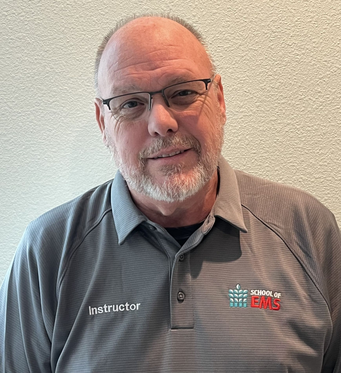
- Article by Corey Sargent | EMS Programs Director | School of EMS
Last Modified: