


Top Growing EMS States: Where EMTs and Paramedics are Highest in Demand
– By #School of EMS
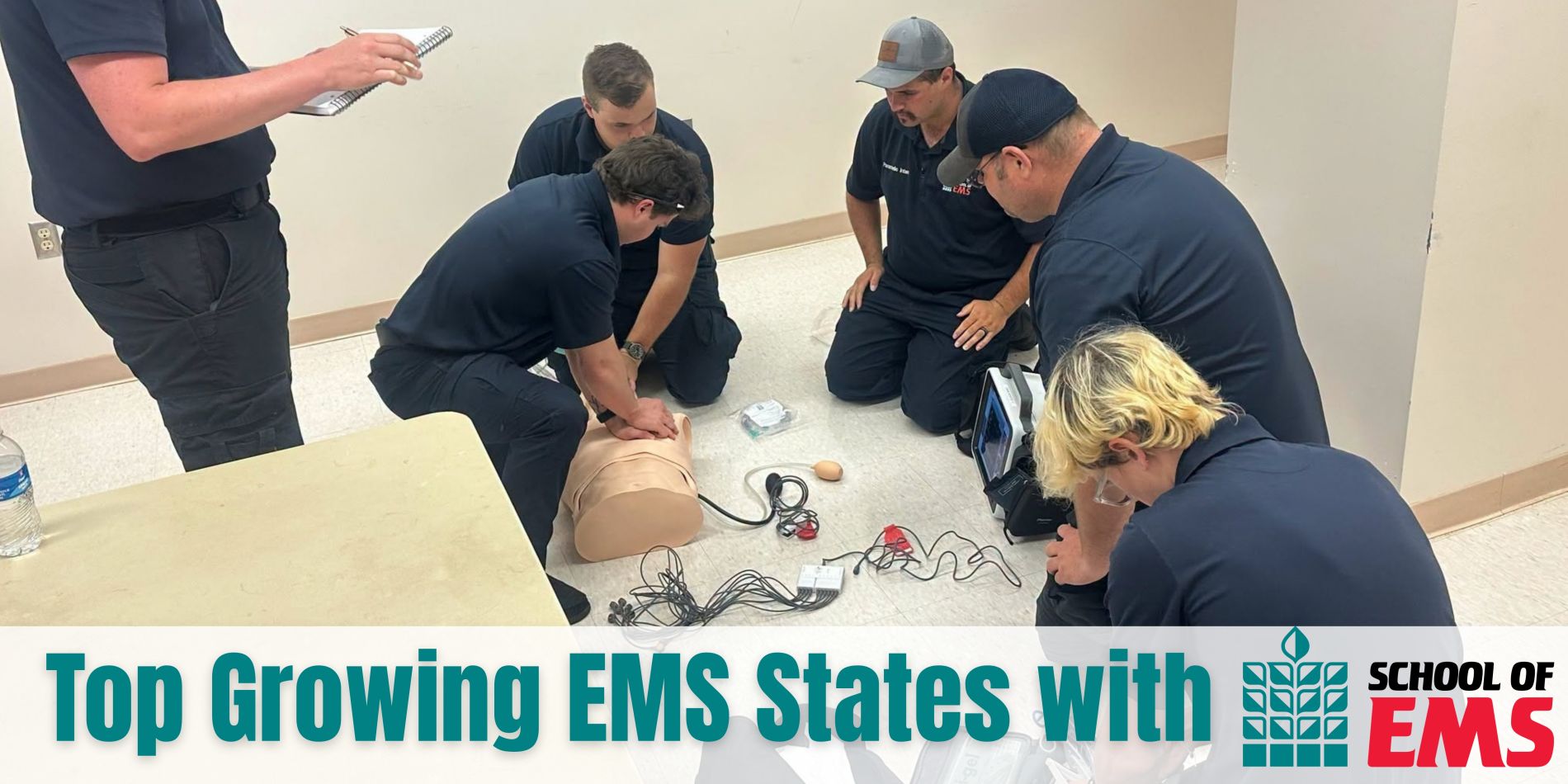
At School of EMS, we're often asked where EMTs and paramedics are needed most. While emergency medical services remain an essential part of healthcare nationwide, demand is not distributed evenly across the country. The strongest opportunities are often found where population growth, hospital transfer needs, rural coverage gaps, and workforce turnover intersect.
For aspiring EMTs, paramedic students, training coordinators, and working clinicians, the question is not simply where jobs exist. It's where quality training, meaningful clinical experience, and long-term career opportunities align. In this guide, we'll explore some of the top-growing EMS states where EMTs and paramedics are in high demand, including Arkansas, Florida, Illinois, Indiana, Iowa, Louisiana, Minnesota, Mississippi, Missouri, Ohio, Oklahoma, South Dakota, Texas, Utah, and Wyoming.
Which EMS States Show the Strongest Growth Signals?

From our perspective, Texas, Florida, Utah, Arkansas, and Minnesota stand out because they combine measurable workforce demand with strong opportunities for clinical experience and career development. Nationally, the U.S. Bureau of Labor Statistics projects EMT and paramedic employment to grow faster than the average for all occupations, with approximately 18,200 openings annually between 2025 and 2035. Those national trends create the foundation for the state-level opportunities we see across the country.
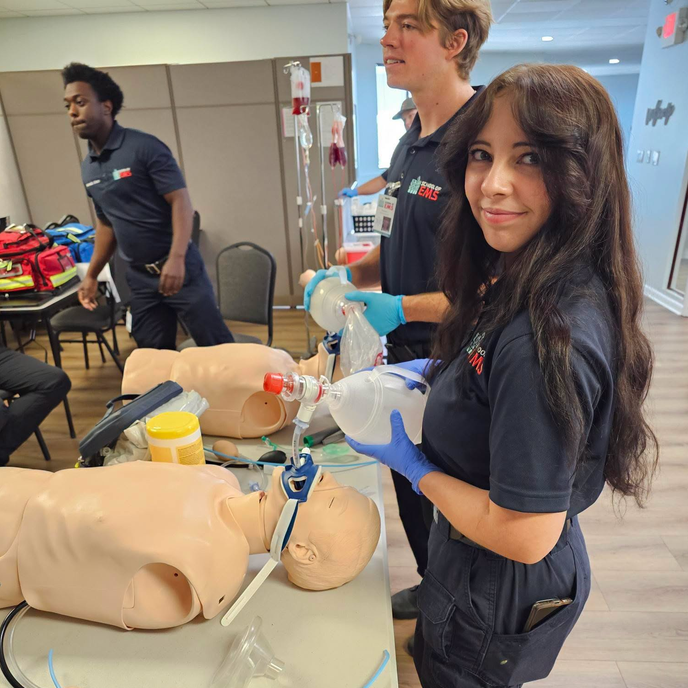
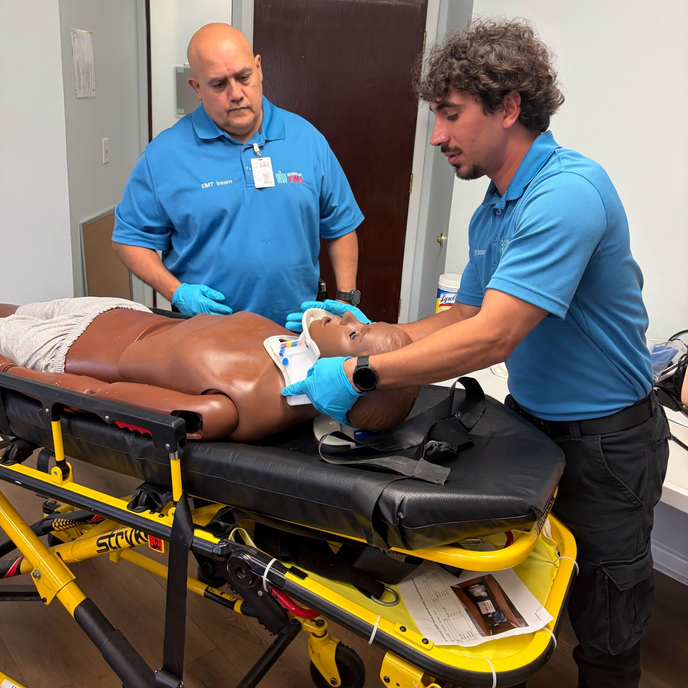
At School of EMS, we also understand that EMS education extends well beyond the classroom. That's why our training model combines flexible online learning with hands-on skills labs, clinical experiences, and field training. Through our network of more than 1,300 clinical partner sites, students have opportunities to gain practical experience alongside hospitals, ambulance services, fire departments, healthcare systems, and emergency response organizations. While clinical-site availability may vary by program, location, and partner requirements, our focus has always been helping students bridge the gap between education and real-world patient care.
Why Does State-Level EMS Demand Matter for Your Career Path?
We encourage students to use workforce data as a planning tool rather than a deciding factor. State-level demand can help you determine where to train, where to complete clinical and field experiences, and where to pursue employment after certification.
A rapidly growing state may create more new positions, while a larger EMS market may offer a wider range of ambulance service careers, hospital-based emergency services roles, interfacility transport opportunities, and fire-based EMS positions. The best decisions balance employment trends with practical considerations such as licensure requirements, clinical availability, lifestyle preferences, and the type of community you hope to serve.
We also recognize that workforce demand is closely connected to staffing and retention challenges throughout the EMS profession. Long shifts, workforce shortages, leadership concerns, and increasing patient complexity continue to affect many agencies. While every system is different, one thing remains consistent: motivated, well-trained, resilient clinicians are highly valued across the industry.
Priority States with School of EMS Relevance
The states highlighted below are especially relevant because they either fall within our educational footprint or align with regions where students commonly pursue training and employment opportunities. As always, we recommend verifying current program availability, clinical placement opportunities, state authorization requirements, and licensure regulations before enrolling.

Texas stands out as one of the clearest high-demand EMS job opportunities in this group. Texas Career Check reports emergency medical technician employment rising from 13,332 in 2024 to 16,483 by 2034, a 23.63% increase, with 1,373 projected annual employment and turnover openings. O*NET reports Texas paramedics at 8,530 employed in 2024, projected to reach 10,370 by 2034, a 22% increase, with 580 projected annual openings.
For students, Texas EMS offers more than a large labor market. The state’s size creates a broad mix of emergency medical jobs: high-volume urban response, rural coverage, event medicine, fire-based EMS, private ambulance service careers, and interfacility transport. For current practitioners, Texas may support paramedic career paths into field training, critical care transport, operations leadership, community paramedicine, or education, depending on employer and local medical direction.
For students, Texas EMS offers more than a large labor market. The state’s size creates a broad mix of emergency medical jobs: high-volume urban response, rural coverage, event medicine, fire-based EMS, private ambulance service careers, and interfacility transport. For current practitioners, Texas may support paramedic career paths into field training, critical care transport, operations leadership, community paramedicine, or education, depending on employer and local medical direction.

Florida EMS shows strong growth indicators for both EMTs and paramedics. O*NET reports Florida EMT employment projected to grow 14% from 2022 to 2032, with 540 projected annual openings, while Florida paramedics are projected to grow 15% from 2024 to 2034, with 400 projected annual openings.
Florida’s EMS demand is often tied to population density, older adult care, tourism, severe-weather readiness, and interfacility movement across a large healthcare market. For an aspiring paramedic, that means strong classroom performance must be paired with comfort in patient communication, documentation, scene safety, and rapid prioritization. For training coordinators, Florida is a reminder that growth alone is not enough; students must be prepared for high patient-contact environments and systems that expect professional consistency from the first shift.

Arkansas EMS deserves attention because it combines measurable growth with relevance to School of EMS authorization and class resources. CareerOneStop reports Arkansas EMT employment projected to rise from 1,100 in 2022 to 1,190 in 2032, an 8% increase, with 90 projected annual job openings. School of EMS materials also identify Arkansas among its state-specific education resources and note authorization by the Arkansas Department of Health for EMR, EMT, AEMT, and paramedic-level courses.
Arkansas can be especially meaningful for students who want a clear view of rural and regional EMS realities. Smaller systems may ask clinicians to develop independence, careful radio communication, and strong transport decision-making sooner than expected. Those demands should not intimidate students; they should reinforce why perseverance, repetition, and supervised clinical practice matter.

Minnesota EMS presents a different kind of signal: not explosive growth, but a meaningful workforce environment with visible state EMS reporting. O*NET reports Minnesota paramedic employment projected to grow 6% from 2022 to 2032, with 90 projected annual openings. Minnesota’s 2025 Office of Emergency Medical Services annual report also highlights workforce movement, including increases in certified EMTs and paramedics since December 2022.
For students and practitioners, Minnesota illustrates the importance of looking beyond one number. A state may not have the fastest percentage growth and still provide serious healthcare job opportunities because of certification volume, geographic coverage needs, hospital networks, and regional EMS infrastructure. Minnesota EMS can appeal to clinicians who value system maturity, continuing education, and varied service settings.

South Dakota EMS is important for students who want to understand rural medicine, distance, and resource stewardship. O*NET reports South Dakota paramedic employment projected to grow 6% from 2022 to 2032, with 20 projected annual openings. South Dakota labor materials for the Balance of State area also show positive 2022–2032 projections for EMTs and paramedics in that region, though regional figures should not be read as statewide totals.
The practical lesson is that demand in smaller states may appear modest in raw numbers but significant in community impact. A single well-prepared EMT or paramedic can materially affect coverage, response reliability, and patient outcomes. For students, South Dakota reinforces the value of disciplined fundamentals: assessment, airway, pharmacology, transport planning, and calm teamwork under pressure.
Additional Target-State Snapshots
The remaining states in this group remain important considerations for EMS careers, especially for students pursuing opportunities near family, military transitions, employer sponsorships, or preferred geographic regions. Some states may show slower percentage growth, but still generate significant annual openings through retirements, workforce movement, and replacement hiring.
Key available snapshots include:
- Utah: O*NET reports EMT employment projected to grow 24% from 2022 to 2032, with 120 projected annual openings, making Utah one of the strongest percentage-growth signals in this defined group.
- Indiana: O*NET reports Indiana EMT employment projected to grow 5% from 2022 to 2032, with 300 projected annual openings.
- Mississippi: Mississippi state labor data reports EMT employment rising from 1,395 in 2022 to 1,450 in 2032, a 3.9% increase, with 104 projected average annual job openings.
- Illinois: BLS geographic wage and employment data has identified Illinois among the states with high EMT employment levels, which can make Illinois relevant for candidates seeking larger emergency medical job markets even when local growth should be verified through current state labor data.
- Iowa, Louisiana, Missouri, Oklahoma, and Wyoming: These states remain relevant to the School of EMS class-location footprint and should be evaluated through current state labor-market data, local ambulance service hiring pages, hospital transfer networks, and certification requirements before relocation or enrollment decisions. School of EMS lists these states in its class-location navigation, but clinical and class availability should be verified at the time of inquiry.
What Should Aspiring EMTs and Paramedics Do with This Information?
At School of EMS, we encourage students to look beyond headline growth statistics. The strongest EMS careers are built by matching market opportunities with personal preparedness, professional discipline, and a commitment to lifelong learning.
Growth trends can help identify promising regions, but your success ultimately depends on your ability to complete training, earn certification, perform under pressure, communicate effectively with patients and colleagues, and become a dependable member of an EMS team.
A practical planning checklist:
- Confirm state licensure rules. BLS notes that all states require EMTs and paramedics to be licensed in the state where they work, and requirements vary by state.
- Compare both growth and openings. Utah has a strong EMT percentage-growth signal, while Texas and Florida show large projected annual openings.
- Investigate clinical access early. Clinical and field experiences are where students convert knowledge into judgment, but placement options may vary by location, partner, and program.
- Look for career ladders. EMT, AEMT, paramedic, field training officer, critical care, community paramedicine, supervisor, educator, and operations leadership are different phases of growth.
- Assess agency culture. High demand should never be your only criterion; leadership, scheduling, mentorship, safety, and continuing education shape career longevity.
Training Quality Determines Career Mobility
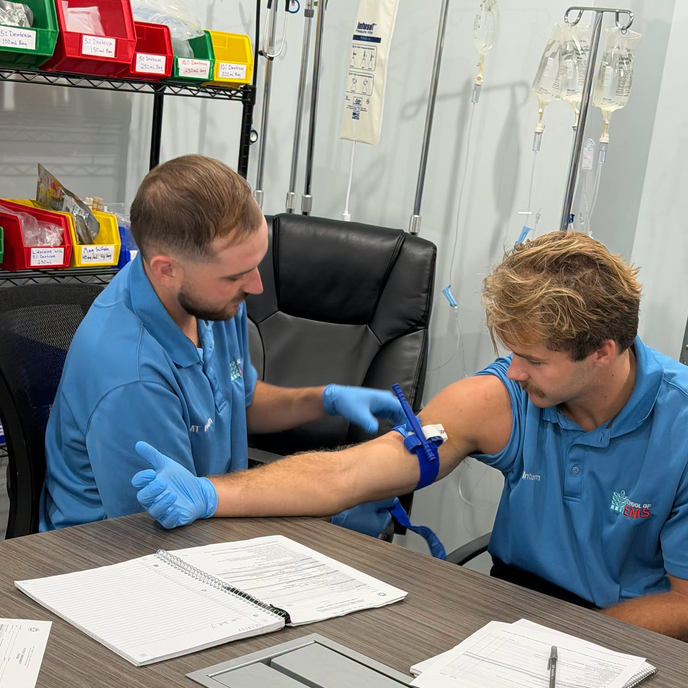
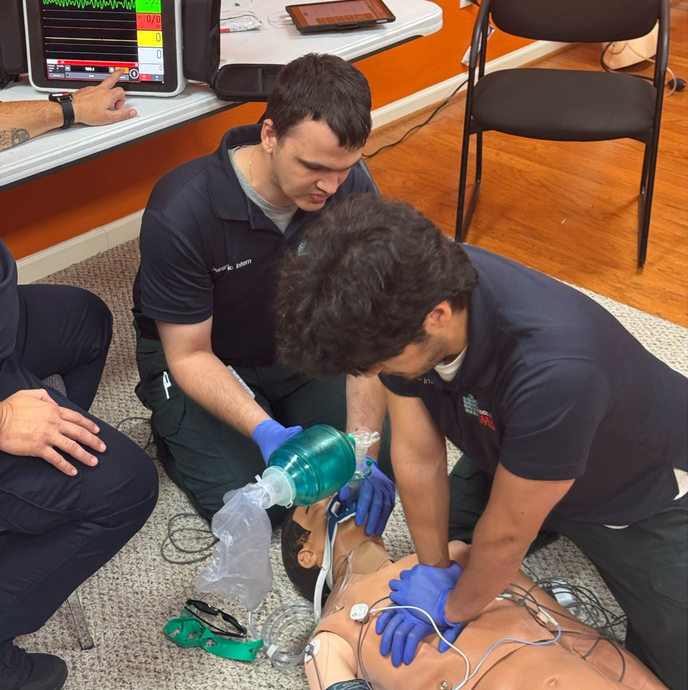
Throughout our experience educating EMS professionals, we've seen that the students who succeed in growing markets are rarely the ones relying solely on motivation. They're the students who develop consistent habits: studying before labs, practicing patient assessments repeatedly, welcoming feedback, documenting accurately, and approaching every simulation as preparation for a real patient encounter.
In EMS, teamwork is not simply a professional value. It's an operational necessity that protects both providers and patients.
This is why we focus on more than certification preparation. We focus on workforce readiness. When students understand that states such as Texas, Florida, Arkansas, and others actively need qualified EMS professionals, classroom expectations become more meaningful. Attendance, medication math, airway management, patient assessment, and communication skills become part of a larger mission: preparing students to serve their communities with competence and confidence.
Start Your EMS Career with School of EMS
If you're exploring EMS as a new career path or preparing to advance from EMT to AEMT or Paramedic, we're here to help you take the next step.
- Learn more about School of EMS: https://www.schoolofems.org/
- Compare our EMR, EMT, AEMT, and Paramedic programs: https://www.schoolofems.org/programs/
- Find available classes in your state: https://www.schoolofems.org/find-a-class/
At School of EMS, our mission is simple: provide flexible, high-quality EMS education that prepares future clinicians for real-world emergency care. If you're ready to build a career that makes a difference every day, we're ready to help you get there.
Final Takeaway
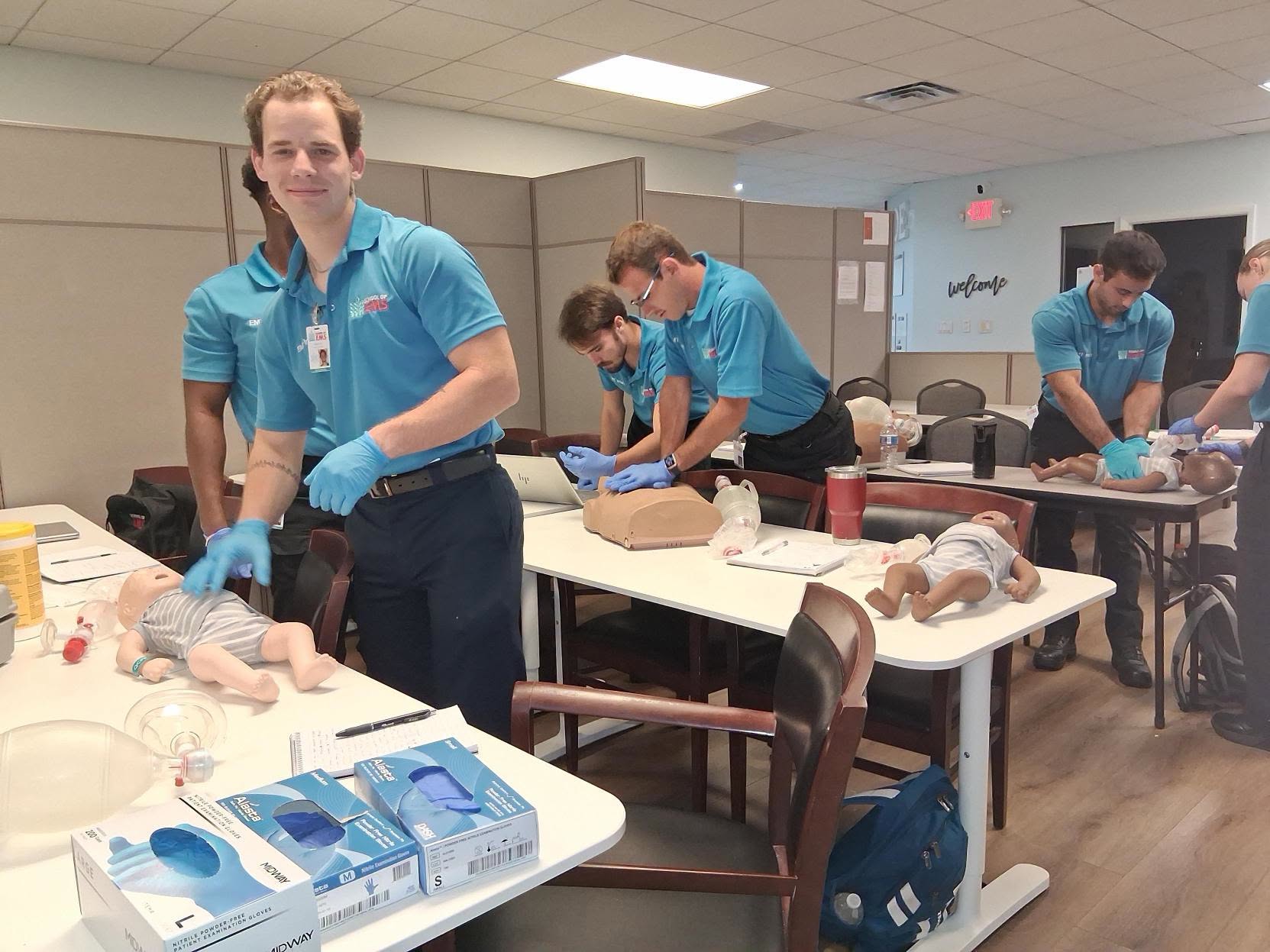
The best EMS career decisions combine workforce demand, access to quality training, and personal commitment. At School of EMS, we believe opportunity favors preparation. The students who commit themselves to mastering the fundamentals, embracing clinical experience, and serving with professionalism are the ones who build long, rewarding careers in emergency medical services. If you're ready to begin that journey, we'll help you develop the skills, confidence, and experience to answer the call.
If you’re seeing that we’re currently not in your state, trust us when we say that we’re continuously working towards expanding nationwide. If you have any questions regarding your location in relation to our EMS coverage, feel free to reach out to our team!
Last Modified: