If you're considering a career in EMS, one of the first questions you're likely asking is, "How long does it take to become a paramedic?" It's a fair question. Becoming a paramedic requires a significant commitment of time, energy, and discipline. Unlike many careers, you're not simply learning information for an exam. You're preparing to make lifesaving decisions in unpredictable situations, often when patients are experiencing some of the worst moments of their lives.
School of EMS' Chad Patereminds us that some of the most meaningful parts of patient care never make it into the documentation. While clinical skills save lives, small acts of empathy, patience, and compassion, from easing a patient's fears to making sure their dog is safe, can make all the difference. The message is simple: great EMS providers care not only for the emergency, but for the whole person behind it.
In EMS, we spend a lot of time talking about the big things. The critical calls, the lifesaving decisions, and the skills that make someone a great provider. But sometimes, it's the little things that leave the biggest impression.
EMS agencies everywhere are balancing the demands of today with the workforce needs of tomorrow. Filling open positions is part of that challenge, but so is preparing the people who are already in our organizations for what comes next. Education plays an important role in that process, whether it's an EMT advancing to AEMT or paramedic, an experienced clinician stepping into an instructor role, or an employee beginning to develop the skills needed for future leadership.
At School of EMS, we're often asked where EMTs and paramedics are needed most. While emergency medical services remain an essential part of healthcare nationwide, demand is not distributed evenly across the country. The strongest opportunities are often found where population growth, hospital transfer needs, rural coverage gaps, and workforce turnover intersect.
The way we treat people while they are learning may shape the clinician they eventually become.This month, Chad Pate challenges us to remember what it was like to be new—and to consider the role experienced clinicians play in shaping those who come behind them. High standards and accountability matter, but so do patience, productive struggle, honest feedback, and creating an environment where learners aren't afraid to say, "I don't know."
From students completing their first skills to experienced clinicians beginning again in unfamiliar environments, Chad reminds us that everyone has been the new person at some point—and that how we teach during those moments matters.
Every experienced EMS professional was once the person trying to remember where the equipment was, second-guessing an assessment, or hoping no one noticed how nervous they were.
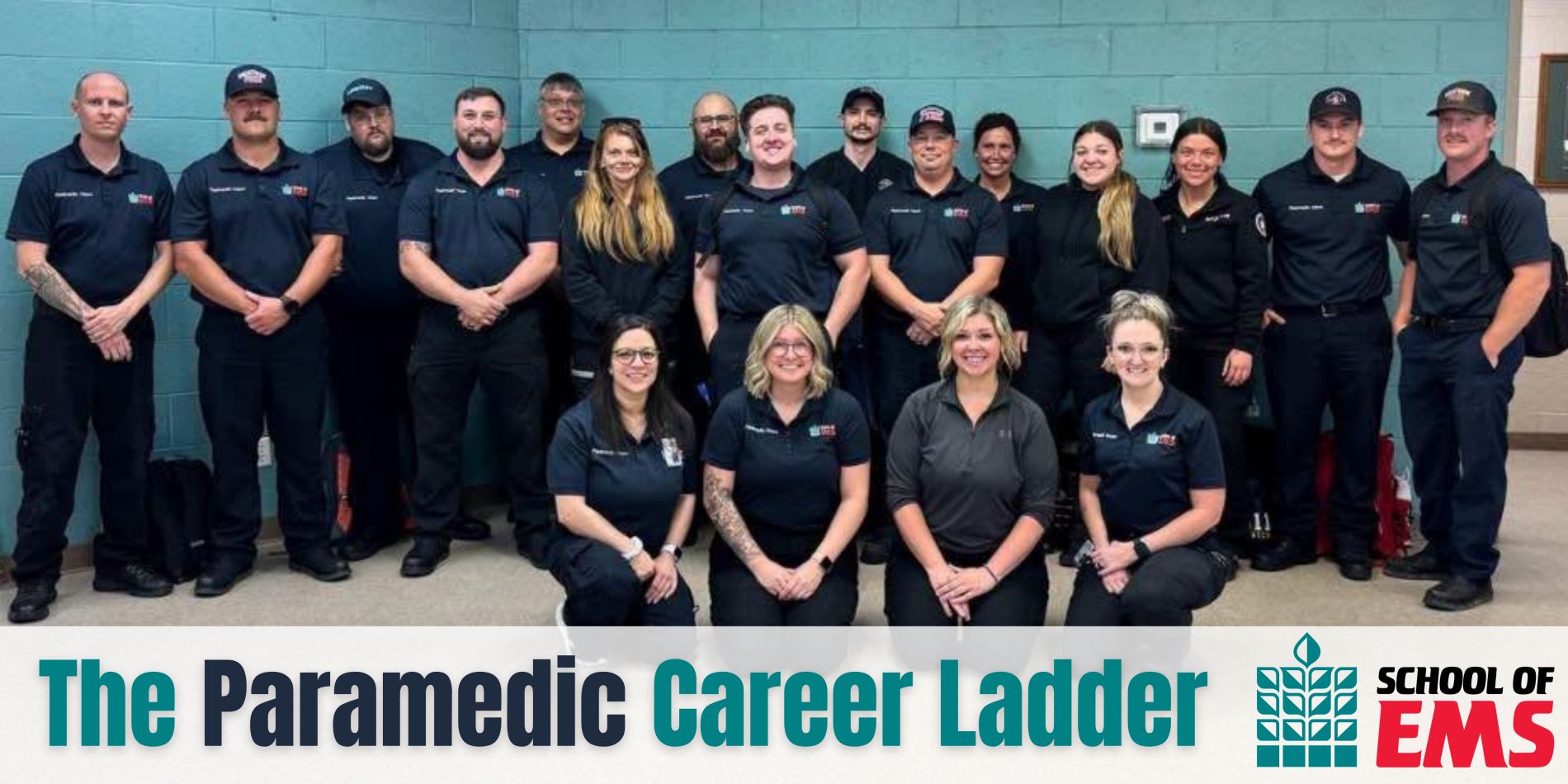
Paramedic work is more than lights, sirens, and ambulance calls. It is a growing healthcare career with clear steps, multiple work settings, and meaningful long-term options for people who want hands-on patient care. If you are searching for paramedic jobs or the outlook of paramedic careers, this guide explains how training, certification, field experience, and career choices can fit together.
Momentum continues to build across School of EMS. June was filled with student milestones, expanding programs, new initiatives, and thousands of educational experiences that continue moving our mission forward.
In EMS, we love a good acronym. We’ve got OPQRST, SAMPLE, and DCAP-BTLS drilled into our brains. But there is one foundational concept that doesn’t have a fancy acronym, and yet its failure is the leading cause of "preventable disasters" in your educational journey: Basic human communication.
When deciding to enter the fast-paced, high-stakes world of emergency medical services, your educational foundation matters. The quality of your training directly impacts your ability to think critically, act decisively, and care for patients during some of the most challenging moments of their lives.
When we think of paramedics, the first image that usually comes to mind is a high-speed ambulance rushing to the scene of an emergency with lights flashing and sirens wailing. However, there is a quieter, equally vital side to their profession that happens behind the scenes. The essential role of patient transporters is a critical component of modern healthcare, bridging the gap between different levels of medical care and ensuring that vulnerable individuals remain safe, stable, and comfortable while on the move.
In EMS education, we spend a great deal of time teaching knowledge and skills. We teach anatomy, physiology, pharmacology, assessment, airway management, cardiac care, trauma care, documentation, and clinical decision-making. These are essential. A provider must know what to do and how to do it.
As the School of EMS continues expanding into new regions and supporting more students across the country, our focus remains fixed on maintaining strong educational standards while improving the systems that support both students and employer partners. Every department continues working together to ensure growth never comes at the expense of consistency, accountability, or outcomes.
A student in paramedic school is a really, *really* good EMT. Everyone wants to work with them, they have great empathy and technical skills, and can even anticipate what their partner needs. They blow through scenarios in lab, and get great preceptor feedback.
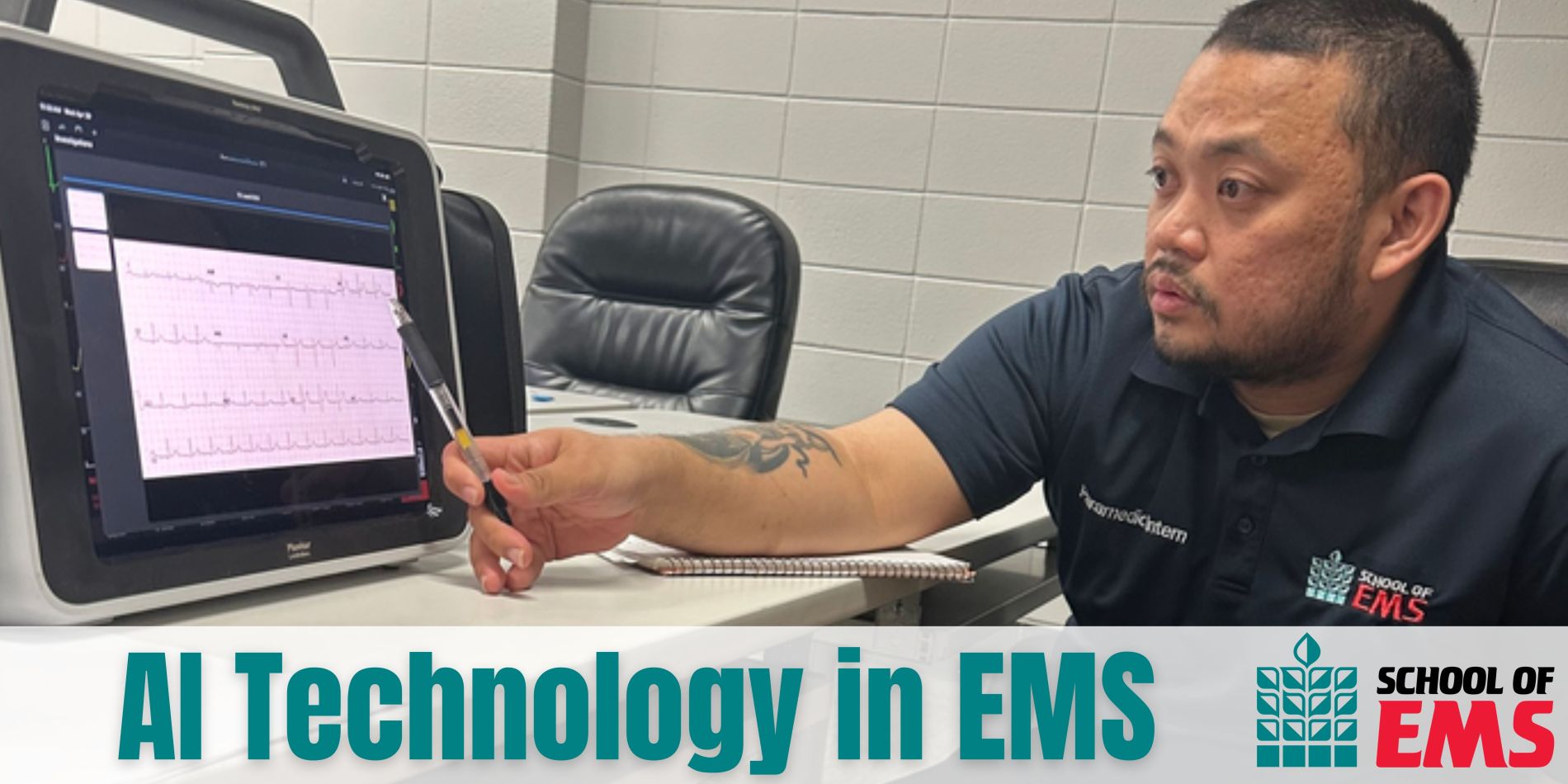
Imagine calling 911 for a loved one, struggling to describe their sudden chest pain. While your local dispatcher and responding paramedics coordinate help, industry data reveals a silent "Digital Guardian" often listens alongside them. This smart software recognizes subtle background breathing problems before you even realize what is happening.
As the School of EMS expands into new states throughout 2026, the focus remains on maintaining the Gold Standard while increasing access for both students and employer partners.
Starting a career in emergency medical services doesn’t require years in medical school. In fact, according to national EMT training standards, you can become an EMT-Basic and begin working in emergency care in just a few months.
In EMS education, “quality” gets talked about often, but rarely defined clearly. Is it pass rates? Clinical hours? Hands-on training? Instructor experience? The reality is, those numbers alone don’t tell you if a provider is ready when it matters. At SOE, quality is built through multiple systems working together. Education, labs, clinical experience, and operational support all align toward producing providers who are ready for the field. This month, we are taking a closer look at what quality actually looks like in practice.
In the EMS education community, phrases like "Diploma Mills" and "Butts in Seats" are thrown around often. If you follow particularly "spicy" conversations online, you’ll hear well-meaning but misguided critics claim that "nobody can teach paramedics online" or that "only degree programs can produce quality paramedics".
Celebrating the commitment, growth, and professionalism of School of EMS students nationwide.
At School of EMS, we believe the path to becoming an EMS professional is built on perseverance, humility, teamwork, and the relentless pursuit of excellence. Our Student and Alumni Spotlight series highlights individuals from across the country who embody these values - students who show up ready to learn, push through challenges, and elevate the people around them.
January was not a quiet month, and that is exactly the point.
Across multiple states, through winter weather disruptions and continued enrollment growth, our teams maintained operational stability and strong student progression. This month reflects expansion supported by disciplined systems.
In healthcare, skill gets you in the door, but affect decides whether anyone wants to follow you through it.
For years, EMS education across the country has focused almost exclusively on measurable performance: grades, hours, competencies, task sheets, and test scores. And those matter. They show what a student can do with their hands. But they don’t always show who a student is when the uniform goes on, when the call drops, or when someone meets you on the worst day of their life.